
The modern international order is collapsing under the weight of its own hypocrisy, and millions of people around the world are no longer pretending not to notice it. Every year, Western governments lecture the world about democracy, human rights, freedom of navigation, international law, sovereignty, and moral responsibility. Yet every year, those same principles mysteriously disappear whenever geopolitical interests, military alliances, or economic dominance are involved. The result is a world that increasingly sees the so called “rules based international order” not as a genuine system of justice, but as a political weapon used selectively against enemies while allies are protected regardless of what they do.
Nothing exposes this hypocrisy more clearly than the situation involving Cuba and Iran.
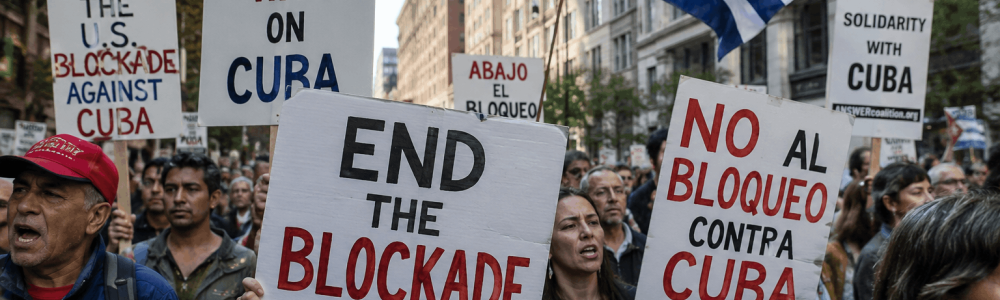
For decades, Cuba has lived under crushing economic restrictions and sanctions largely driven by the United States. The effects have not been theoretical. They have affected medicine, energy supplies, industrial equipment, food systems, and economic development for ordinary Cubans. Reports that Cuba has now completely run out of diesel and fuel oil are not simply economic stories. They are humanitarian stories. Hospitals suffer. Transportation collapses. Electricity becomes unstable. Essential services fail. Ordinary citizens pay the price for geopolitical warfare carried out by powerful nations far away from the daily suffering on the ground.
What makes the situation even more astonishing is that year after year, the overwhelming majority of countries at the United Nations vote against the embargo on Cuba, yet nothing changes. The blockade continues. The suffering continues. The economic strangulation continues. Countries that constantly speak about collective punishment and humanitarian law in other contexts suddenly become silent when the victims are Cuban.
This is where the hypocrisy becomes impossible to ignore.
Western governments and media outlets often describe sanctions as “peaceful pressure,” but for ordinary civilians living under them, sanctions can feel indistinguishable from economic siege warfare. A country denied fuel, medicine, trade access, financing, and industrial capacity over decades does not experience sanctions as an abstract diplomatic disagreement. It experiences them as daily hardship, stagnation, and in many cases death.
Yet when the conversation shifts to the Strait of Hormuz and Iran’s threats or actions affecting global shipping routes, the language changes immediately. Suddenly, freedom of navigation becomes sacred. Suddenly, disruptions to oil flows become an international emergency. Suddenly, economic pressure becomes unacceptable and dangerous. Suddenly, retaliation becomes irrational aggression rather than predictable geopolitical response.
Many people across the Global South see this contradiction clearly.
They ask why economic strangulation against Cuba for decades is considered acceptable policy, but disruptions affecting Western energy security are treated like intolerable crimes against civilisation. They ask why entire populations can be suffocated economically with little outrage from powerful capitals, but when the consequences of military escalation begin affecting global markets and Western consumers, the world is suddenly expected to panic.
The situation involving Iran is even more explosive because many people believe the West frames every aspect of the conflict selectively. From the perspective of Western governments, Iran is often portrayed primarily as a destabilising actor threatening regional security. However, many others around the world see a country that has lived under sanctions, military threats, covert operations, assassinations, economic warfare, and continuous geopolitical pressure for decades while being surrounded by US military bases and hostile regional rivals.
That does not mean every Iranian policy or action is automatically justified. It means global audiences increasingly reject narratives that erase the broader historical context behind regional tensions. When countries feel cornered, threatened, or targeted for regime change, they rarely respond passively. History shows this repeatedly.
What frustrates many observers globally is the perception that powerful countries expect absolute restraint from rivals while showing very little restraint themselves. The message often appears to be that Western powers and their allies can impose sanctions, conduct military operations, apply economic pressure, and reshape regional politics in the name of security, but countries on the receiving end are expected to absorb the pressure quietly without retaliating or resisting.
That expectation no longer convinces large parts of the world.
Across Africa, Asia, Latin America, and the Middle East, there is growing anger toward what many see as selective morality in global politics. International law appears rigid when applied to weaker states but flexible when applied to powerful ones. Human rights are amplified loudly when violations involve enemies, but become diplomatically inconvenient when allies are responsible. Sovereignty is defended passionately in some conflicts and ignored in others.
This growing perception of double standards is one of the biggest reasons why Western influence is gradually weakening across much of the world. Trust is collapsing. Credibility is eroding. More countries are beginning to align themselves strategically outside traditional Western influence because they no longer believe the international system operates fairly.
The irony is that Western governments often appear genuinely shocked by this reaction. Many still assume their narratives automatically dominate global opinion the way they did during the post Cold War era. But the information environment has changed permanently. People across the world now consume multiple perspectives instantly through social media, independent journalists, regional media networks, and alternative geopolitical analysis. Narratives are no longer controlled exclusively by Western capitals or legacy media institutions.
That is why anger over Cuba, Iran, Palestine, sanctions, military interventions, and global double standards keeps growing louder online. Millions of people increasingly believe the international system punishes weakness rather than wrongdoing. They see a world where geopolitical power determines morality more often than principles do.
This perception is dangerous because international systems survive largely on legitimacy. Once enough countries and populations stop believing the rules are fair, the system itself begins losing authority. We are already seeing signs of this through the rise of BRICS, alternative trade systems, de dollarisation efforts, and the increasing willingness of countries to resist Western pressure openly.
The world does not need more propaganda from any side. It needs consistency. If collective punishment is wrong, then it should be wrong everywhere. If sovereignty matters, then it should matter for allies and rivals alike. If economic warfare that harms civilians is unacceptable, then that principle cannot suddenly disappear depending on which flag is involved.
Global hypocrisy has reached levels that large portions of humanity no longer tolerate silently. The anger building across the world is not simply anti Western sentiment. It is frustration with a system that many believe says one thing publicly while practicing something completely different in reality.
And unless that contradiction is addressed honestly, the international order will continue losing moral authority with every passing year.