
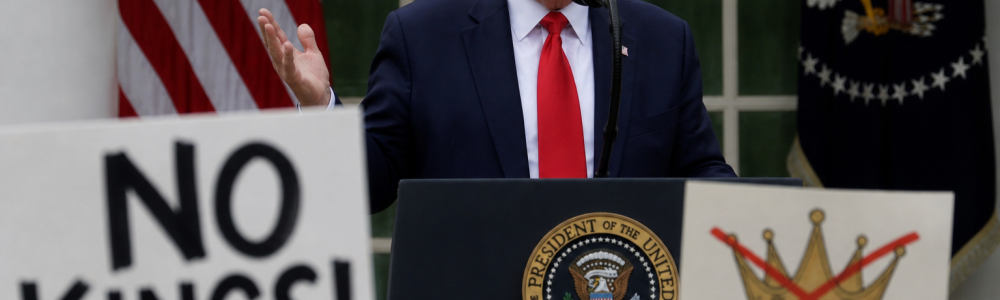
When Donald Trump speaks today, markets listen, governments react, and allies pause in confusion, yet what has become increasingly clear is that the pattern of decisions coming out of Washington no longer follows a coherent economic or strategic logic, but instead reflects a mix of impulsive politics, short term optics, and actions that ripple far beyond American borders in ways that are destabilising both the United States and the wider global economy.
There was a time when the United States, for all its contradictions, projected a form of predictability in global affairs, where allies could anticipate policy direction and markets could price in risk with some degree of confidence, but what the world is witnessing now is something different, something far more erratic, where sanctions are announced without clear economic rationale, wars are declared over in words while continuing in practice, and domestic controversies bleed directly into foreign policy in ways that weaken institutional credibility.
Take the recent expansion of sanctions against Cuba, announced by senior officials including Treasury and trade leadership, which has left many observers asking a simple question that no one in Washington seems willing to answer honestly, which is what exactly Cuba has done in recent years to justify an escalation of economic hostility from the world’s largest economy, especially given that Cuba poses no credible military or strategic threat to the United States and has not done so for decades.
The blockade of Cuba is not new, but its continuation in the current global climate is increasingly seen as an anachronism, a relic of Cold War thinking that refuses to die, and when such policies are expanded rather than reconsidered, it sends a message not of strength but of stubbornness, suggesting that American policy is less about responding to present realities and more about clinging to outdated positions that no longer serve a meaningful purpose in a rapidly changing world.
At the same time, the Trump administration has made a public declaration that the war with Iran is over, a statement delivered to Congress in a manner that might appear reassuring on the surface but becomes far more complicated when placed in the context of constitutional timelines and the practical realities on the ground, where military logistics, sanctions, and regional alignments tell a very different story from the one presented in official speeches.
The United States operates under legal frameworks that require the executive branch to inform Congress within a defined number of days when engaging in hostilities, and what is increasingly being suggested by critics is that the declaration of an end to the conflict may serve less as a genuine shift in policy and more as a procedural reset, effectively restarting the clock while maintaining the underlying posture of pressure and engagement, which includes continued enforcement of blockades and the movement of military resources into the region.
This contradiction between words and actions is not a minor detail but a central issue, because global markets, energy prices, and diplomatic relations respond not just to what is said but to what is done, and when there is a gap between the two, uncertainty grows, and uncertainty is one of the most destabilising forces in any economic system.
Nowhere is this more evident than in the energy markets, where tensions involving Iran, combined with broader instability in the Middle East, have contributed to rising oil prices that affect not just the United States but economies across Africa, Asia, and Europe, increasing the cost of transportation, food production, and basic goods in a chain reaction that pushes more people toward economic hardship.
Even voices within the international system, such as António Guterres, have warned that these dynamics could push tens or even hundreds of millions of people closer to poverty, a projection that underscores the real world consequences of policy decisions that may appear abstract when discussed in political terms but become deeply tangible when translated into prices at the market and conditions on the ground.
The situation becomes even more complex when one considers the role of regional actors such as Israel, whose ongoing military actions in places like Gaza and Lebanon continue despite calls for restraint, with reports of civilian casualties, including journalists, raising serious concerns about the nature of the conflict and the extent to which external support, particularly from the United States, enables or at least fails to restrain such actions.
These developments are not isolated from the broader question of American credibility, because when the United States calls for peace in one forum while supporting or tolerating escalation in another, it creates a perception of inconsistency that undermines its ability to act as a stabilising force in global affairs, and that perception has consequences that extend into trade, diplomacy, and financial systems.
Domestically, the picture does not become clearer but rather more complicated, as controversies surrounding spending priorities and governance raise additional questions about the direction of the administration, including the decision to push forward with the construction of what has been described as a grand ballroom project funded through mechanisms that critics argue contradict earlier assurances about private financing, turning what might have been a minor issue into a symbol of broader concerns about transparency and accountability.
These concerns are amplified by reports involving business dealings connected to members of the President’s family, particularly allegations that investments in foreign ventures have coincided with significant government funding decisions, raising familiar questions about the intersection of public power and private gain, and inviting comparisons to previous administrations where similar accusations were made, leading to a broader and more uncomfortable conclusion that corruption, or the perception of it, does not belong to one political party but remains a persistent feature of the system itself.
At the same time, rhetoric coming from the administration has added another layer of tension, particularly statements that suggest extreme measures against Iran or that adopt tones which resonate differently across cultural and religious contexts, creating moments of backlash that extend even to figures such as Pope Francis, whose criticisms have reportedly been met with sharp responses, further complicating relationships that have historically been handled with greater diplomatic care.
All of this feeds into a broader narrative that the United States is not just pursuing aggressive policies abroad but doing so in a manner that appears increasingly disconnected from long term strategy, raising the question of whether these actions are part of a coherent plan or simply the result of a leadership style that prioritises immediate impact over sustained stability.
The economic implications of this approach are significant, because global markets rely on a degree of predictability from major powers, and when that predictability is replaced by volatility, investment decisions become more cautious, supply chains become more fragile, and growth prospects become more uncertain, creating an environment in which even small shocks can have amplified effects.
This is particularly important for countries in the global south, where economic resilience is often limited and exposure to external shocks is high, meaning that decisions made in Washington can translate quickly into inflation, currency pressure, and reduced access to essential goods, reinforcing a sense that the costs of instability are not shared equally but are borne most heavily by those with the least capacity to absorb them.
Against this backdrop, the symbolism of political messaging takes on added significance, including moments such as the publication of imagery and captions that appear to celebrate monarchical themes in a country whose founding identity is rooted in the rejection of kings, a move that may be intended as humour but is interpreted by many as tone deaf or dismissive of public sentiment, particularly in the context of protests and political movements that emphasise democratic accountability.
When these elements are brought together, what emerges is not a single policy failure but a pattern, one in which economic disruption, foreign policy inconsistency, and domestic controversy intersect to create a sense of drift, where the direction of the United States appears less certain and its role in the global system more contested.
The question that follows is not just about the immediate impact of these actions but about their longer term implications, particularly whether the current trajectory leads to a rebalancing of global power, a weakening of established institutions, or a deeper fragmentation of the international order into competing blocs with fewer mechanisms for cooperation and conflict resolution.
There are already signs that such a shift may be underway, as countries explore alternative financial arrangements, diversify trade partnerships, and reduce reliance on systems perceived to be overly influenced by a single power, a process that may accelerate if confidence in American leadership continues to erode.
In that sense, the issue is not simply whether current policies are effective or justified, but whether they are sustainable in a world that is becoming more interconnected and yet more divided, where actions taken in one region can have immediate and far reaching consequences in another, and where the margin for error is increasingly small.
What is clear is that the global economy does not respond well to unpredictability, and that leadership, especially from a country as influential as the United States, carries responsibilities that extend beyond domestic politics and into the stability of the entire system, making it essential that decisions are grounded not just in immediate advantage but in a clear understanding of their broader impact.
Right now, that grounding appears uncertain, and until it is restored, the question of whether America is losing its sense of direction will continue to be asked, not just by critics but by allies, partners, and markets that depend on its stability.