
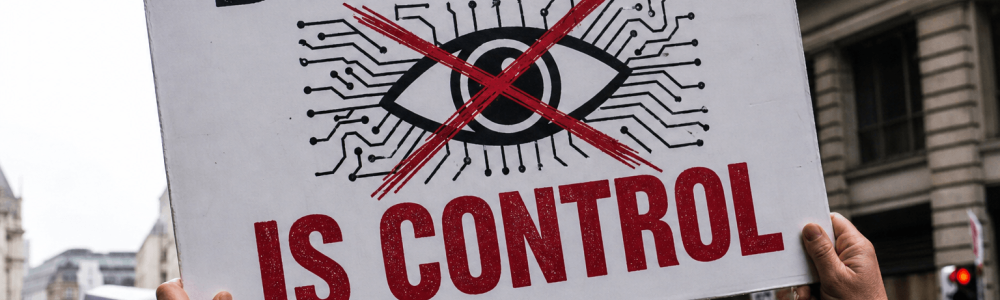
There is a story being sold to the public across Europe, the United Kingdom and Australia and it sounds harmless at first glance because it is wrapped in the language of convenience, security and modernisation, yet beneath that polished surface sits something far more serious, a structural shift in how power interacts with ordinary people, a shift that many are only just beginning to understand and even fewer are prepared for. Digital identity systems are being introduced as the natural next step in a connected world, a simple way to prove who you are online, to access services faster, to reduce fraud and streamline everything from banking to healthcare, but that is only one side of the story and it is the side that governments and institutions are very keen for you to focus on while the other side quietly expands in the background.
What is actually happening is the construction of a system where your ability to exist fully in society becomes increasingly tied to a centralised digital identity, a system that can be monitored, restricted, updated and in extreme cases switched off, and once that framework is in place it does not need to be abused immediately for it to become dangerous because the mere existence of such a tool changes the balance of power between citizens and the state in a way that history has repeatedly shown can be exploited when the conditions are right. People are not reacting strongly to this because the rollout is gradual and fragmented across policies, pilot schemes and regulatory tweaks that seem technical and distant, but when viewed as a whole it becomes clear that this is not just about logging into websites more easily, it is about redefining the relationship between identity, access and control in the digital age.
Public opinion is beginning to shift and that should not be ignored because even in places where digital identity has been framed as inevitable there is growing unease about what it means in practice, surveys and research discussions have shown that opposition is not only present but increasing as people start to ask more pointed questions about data usage, surveillance and the long term implications of linking identity to everyday activities in such a rigid way. This is not paranoia or resistance to change, it is a rational response to a system that concentrates power while asking the public to trust that it will never be misused, a promise that no government in history has been able to keep indefinitely.
One of the most alarming aspects of this shift is the emerging idea that access to the internet itself could be conditioned on identity verification, a concept that fundamentally alters what the internet has been since its inception as a relatively open and anonymous space where ideas could be exchanged without constant oversight, and while governments argue that this is necessary to tackle crime, misinformation and online harm, the reality is that such measures do not operate in a vacuum and they inevitably affect ordinary users far more than the criminals they are meant to target. When proposals start to include restrictions on tools like VPNs which people use to maintain privacy and security online, it signals a move away from protecting citizens towards managing them, because limiting the ability to bypass identity checks is not just about enforcement, it is about closing off avenues of independence.
The justification for restricting VPN usage is often framed around preventing bad actors from evading regulations, yet this argument conveniently ignores the fact that VPNs are widely used by businesses, journalists, activists and everyday users to protect sensitive information and maintain a degree of privacy in an increasingly monitored digital environment. Removing or restricting that option does not just catch criminals, it weakens the general population’s ability to operate freely and securely online, and once that capability is gone it is not easily regained because the infrastructure and legal precedent will already be in place to justify further restrictions.
The downsides of a stringent digital ID system are not hypothetical and they extend far beyond privacy concerns into the core of how societies function, because when identity becomes the gateway to services it also becomes a point of failure, and that failure can be technical, administrative or political. Systems can go down, databases can be breached, errors can occur, and in a world where your digital identity is tied to banking, healthcare, travel and communication, even a temporary disruption can have serious consequences. More concerning is the possibility of deliberate restriction where access can be limited based on compliance with rules that may evolve over time, and this is where the line between governance and control starts to blur in ways that should make any serious observer uncomfortable.
There is also the economic angle which is rarely discussed openly but is deeply connected to this shift because once identity is tightly integrated with financial systems it becomes easier to monitor transactions, enforce restrictions and potentially shape behaviour through access to money. This does not mean that governments will immediately start controlling how people spend their money, but it creates the infrastructure where such control becomes possible, and history suggests that once a capability exists it tends to be used, especially in times of crisis when extraordinary measures are justified as temporary but have a habit of becoming permanent.
Looking beyond Europe and the UK, it is important to understand how other global powers view these developments because they are not operating in isolation. China already has a highly integrated digital identity and surveillance system that ties together social, financial and behavioural data in a way that allows for extensive monitoring and control, and while Western governments insist that their systems will be different, the underlying mechanics are not entirely dissimilar which raises valid concerns about where the line will be drawn and who gets to draw it. Russia has also developed its own digital identity frameworks which are closely linked to state services and control mechanisms, and both countries are watching Western experiments with interest because they provide a form of validation for systems that were previously criticised as authoritarian.
The United States presents a more fragmented picture where there is resistance to a centralised national digital ID system, but there are still ongoing discussions and developments at both state and federal levels that could lead to similar outcomes over time, especially as pressure builds to standardise identity verification for security and commercial purposes. What makes the US different is its strong tradition of scepticism towards centralised authority, yet even there the balance between convenience and control is being tested as digital services expand and the demand for secure identification grows.
The risk of authoritarian drift is not something that happens overnight with a dramatic announcement and a clear turning point, it happens gradually through layers of policy, technology and social acceptance that make each step seem reasonable in isolation while collectively moving the system in a direction that would have been rejected outright if presented all at once. Digital identity systems fit perfectly into this pattern because they are introduced as solutions to real problems, they offer tangible benefits, and they are difficult to oppose without being labelled as anti progress or overly suspicious, yet the long term implications are significant enough to warrant serious scrutiny rather than blind acceptance.
People need to pay attention to several key signals as these systems continue to develop because they will indicate whether the trajectory is towards balanced use or excessive control. One of the most important is the scope of data collection and how it expands over time, because systems rarely remain static and there is always a push to integrate more services and gather more information in the name of efficiency. Another is the level of transparency and oversight, particularly whether independent bodies have real power to audit and challenge how these systems are used or whether oversight is largely symbolic.
Restrictions on anonymity should also be watched closely because they represent a fundamental shift in how individuals interact with the digital world, and once anonymity is eroded it changes not only privacy but also freedom of expression and the ability to dissent without fear of retaliation. The treatment of tools like VPNs and encryption will be another clear indicator because efforts to weaken or control these technologies often signal a broader intent to increase visibility into user activity rather than simply enhance security.
Financial integration is another critical area because linking digital identity to payment systems creates a powerful lever that can be used to enforce compliance in ways that go beyond traditional law enforcement, and while this may be presented as a way to prevent fraud and improve efficiency, it also raises questions about how much control should be concentrated in a single framework. Finally, the legal thresholds for restricting access to services need to be examined carefully because they determine how easily and under what conditions individuals can be excluded from systems that are becoming essential for daily life.
The bottom line is that digital identity is not inherently bad, but the way it is being designed and implemented in many places raises legitimate concerns that should not be dismissed or downplayed. The conversation needs to move beyond surface level benefits and address the deeper structural changes that these systems introduce because once they are fully embedded it will be extremely difficult to reverse course. This is not a call to reject technology or progress, it is a call to recognise that not all progress is neutral and that the choices made now will shape the balance of power for decades to come.
If people treat this as just another policy change or technical upgrade they will miss the bigger picture, and by the time the implications become obvious the system will already be too entrenched to challenge effectively. This is the moment to pay attention, to question, to demand clarity and safeguards that are meaningful rather than performative, because once identity becomes the key to everything the question is no longer just who you are, it is who decides what you are allowed to do.