When a Government Starts Mapping Your Protest Before You March
There is something inherently unsettling about a government possessing the precise details of where a political protest will take place, but there is something considerably more alarming when that state actively publishes a public forecast detailing the exact dates, local times, geographical locations, and identifying markers of thousands of demonstrations across the globe. This dynamic becomes monumentally more consequential when artificial intelligence, open-source intelligence operations, and vast government databases coalesce to transform this raw data into a coordinated, global apparatus designed to anticipate political opposition. The scope of this development reaches far beyond a single state monitoring local demonstrations; rather, it highlights what happens to the global landscape when statecraft shifts to become thoroughly network-centric.
A prominent example of this operational transition can be found in the actions of the Israeli Ministry for Diaspora Affairs and Combating Antisemitism, which has been compiling and distributing what it refers to as J-SOC reports that forecast anti-Israel demonstrations worldwide. The ministry’s own documentation reveals that these analytical briefs contain remarkably granular information, with earlier iterations going so far as to identify individual gatherings by their precise calendar dates, exact local arrival times, physical locations, and specific geographic coordinates. In September 2026, the ministry published another targeted special report that focused entirely on anticipated global mobilizations surrounding the upcoming October 7 anniversary. According to data circulating from this latest forecast, approximately 2,000 separate protest events spanning 55 different countries were cataloged, with the United States reportedly accounting for roughly 220 events, the United Kingdom following closely with 217, and Italy reaching 169, while Ukraine sat at the bottom of the registry with only a single documented event.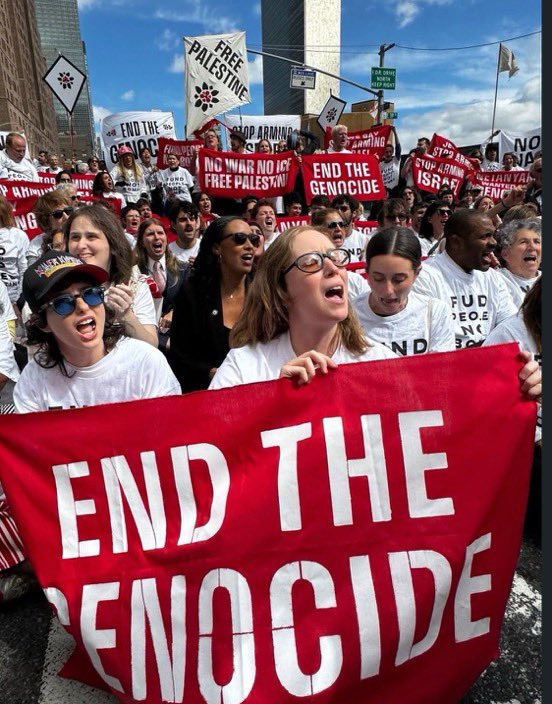
The raw metrics themselves, however, do not necessarily represent the most frightening element of this evolution, given that sovereign governments have always monitored public demonstrations, intelligence agencies have historically collected data on groups deemed hostile, and diplomatic missions have long kept a close watch on foreign political activities. The true technological departure lies in the newfound capability of states to construct a living, breathing map of global political mobilization in real time. Modern artificial intelligence can seamlessly scrape public digital platforms while predictive algorithms identify emerging events well before they manifest on physical streets. These systems can instantly correlate individual organizers, physical venues, calendar timelines, and unfolding online conversations, thereby empowering government analysts to determine exactly where political opposition is likely to erupt before a physical demonstration even begins.
This technical capability fundamentally reshapes the traditional relationship between the state and political dissent, shifting the reality of a protest from an organic event that simply happened to an occurrence that is increasingly predicted. Once a public gathering becomes entirely predictable, it simultaneously becomes vulnerable to being targeted, counter-mobilized against, monitored, influenced, or actively disrupted. This context sheds a far more serious light on recent diplomatic events, such as the widely circulated image of an Israeli official taking notes as various diplomats walked out during Benjamin Netanyahu's United Nations speech. While the digital public quickly converted the image into a passing internet joke, the far more critical question is not whether notes were being taken, but rather what modern governments choose to do with that specific information once it resides within their databases.
Israel appears to recognize an essential reality that many global administrations have yet to fully comprehend: modern political conflict increasingly occurs through decentralized digital networks. The contemporary battlefield is no longer confined exclusively to the physical combat zones of Gaza and Lebanon, or the formal diplomatic chambers of the United Nations. Instead, the front lines have shifted to university campuses, TikTok feeds, X profiles, and Instagram stories, as well as the physical streets of London and the public parks of Washington. This new geography is populated by journalists, digital influencers, diaspora organizations, grassroots activists, online communities, and the broader current of public opinion itself.
Consequently, the Israeli state has spent considerable resources building an institutional infrastructure tailored precisely for this international information battle. The Ministry for Diaspora Affairs officially frames its operational mandate around the necessity of combating global antisemitism and countering what it views as anti-Israel misinformation and systemic media bias. In alignment with this strategy, the Israeli government recently announced an expansive, coordinated campaign with its National Public Diplomacy Directorate that is explicitly designed to counter what it characterizes as the "UN's Lie Industry."
While that remains the official institutional narrative, digital technology is fundamentally indifferent to political framing, meaning that the exact same technical infrastructure built to protect minority communities from genuine security threats can be repurposed to establish a sweeping, unprecedented capacity for domestic and international political surveillance. This overlapping capability is precisely where the broader democratic crisis begins to take shape. One must imagine a near future in which every significant public protest can be accurately forecast several days in advance, with the location, the organizers, the projected attendance, the mobilizing online networks, the specific slogans, and the likely counter-protesters all known ahead of time. When a centralized algorithm can instantly identify which physical locations are most politically vital, the state ceases to be a mere observer of civic action and instead acquires the capacity to pre-shape the political battlefield.
This potent technological capability will certainly not remain exclusive to Israel. China will undoubtedly deploy increasingly sophisticated iterations of these systems to enforce public order, the United States and European governments will continue to integrate them into their national security architectures, and African governments will eventually adopt them into their own state apparatuses. Furthermore, multinational corporations, domestic political parties, and authoritarian regimes worldwide will inevitably leverage these tools to neutralize legitimate political opposition. Because of this universal applicability, the core issue cannot be reduced to a binary debate over whether someone supports Israel or Palestine; the deeper, more urgent problem lies in the specific kind of political technology that global society is currently normalizing. There remains a vast, fundamental gulf between identifying a credible physical security threat and engineering a systematic pipeline designed to map peaceful political opposition, just as there is a profound difference between countering prejudice and treating broad political dissent as a technical information-security flaw.
These distinctions matter immensely because this technological transition introduces a deeply corrosive secondary danger. Once the general public recognizes that governments are actively running sophisticated information operations around public demonstrations, citizens will naturally begin to question whether any single incident surrounding a protest is genuinely organic. If a highly inflammatory slogan appears at a rally, the public will wonder if it was authentic or deliberately planted. If an individual attempts to instigate violence, onlookers will question who actually financed the disruption. If a peaceful assembly suddenly devolves into chaotic rioting, observers will doubt whether the escalation was spontaneous, and if malicious imagery is intentionally produced, the public will question whether it came from a genuine participant or an outside provocateur attempting to discredit the wider movement.
These systemic doubts have the potential to become politically explosive and deeply polarizing even in the complete absence of physical evidence to support a specific allegation of state interference. This pervasive atmosphere of suspicion is precisely why governments engaging in this brand of digital activity require far greater transparency, rather than less. When a sovereign state possesses the technological muscle to predict human mobilization, the voting public requires a clear understanding of where legitimate security monitoring ends and active political manipulation begins. Without these transparent boundaries, the technology itself transforms into a permanent engine of societal distrust.
Ultimately, this all-encompassing atmosphere of suspicion may prove to be the most dystopian aspect of the entire development. The future of political warfare may no longer look like traditional military divisions crossing sovereign borders; instead, it will increasingly resemble clean digital dashboards, interactive maps, sprawling databases, predictive models, social-media graphs, automated alerts, and rooms of government analysts watching thousands of citizens prepare to walk out onto a public street before those individuals have even left their homes. The definitive question confronting modern democracies is no longer whether governments are watching the protest, but rather what they are capable of doing with the information they hold.